Expressvpn Glossary
Data mart
What is a data mart?
A data mart is a focused storage system containing the subset of data from a larger repository, like a data warehouse. It’s built to serve specific departments or business functions in an organization by making key data available to a predefined group of users.
The core purpose of a data mart is to streamline access to frequently used data, improve user response time, and allow a finer level of control over access to data. By reducing the volume of data that users must search through, data marts help teams access the information they need quickly without navigating massive repositories of data.
How does a data mart work?
A data mart works by extracting and organizing a targeted subset of data from one or more sources, often a centralized data warehouse.
First, relevant data is pulled from source systems such as transactional databases, customer relationship management (CRM) platforms, or enterprise data warehouses. Next, the data is cleaned, filtered, and transformed to ensure it is accurate, consistent, and structured for analytical use. This step removes duplicates, corrects errors, and aligns data formats.
The processed data is then stored in a smaller, focused database designed specifically for a department or business function. Once available, analysts, managers, and business users can query the data mart to generate reports, track key performance indicators (KPIs), and create visual dashboards that support faster, data-driven decisions.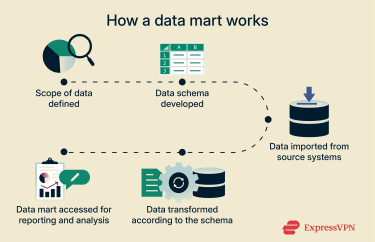
Types of data marts
The following are the three main types of data mart architectures:
- Dependent data mart: A dependent data mart is created from an existing data warehouse. It pulls a subset of enterprise-level data and tailors it to the needs of a specific department or business unit.
- Independent data mart: An independent data mart operates as a standalone system. It collects data directly from operational systems or external sources rather than relying on a central data warehouse. It’s often used when a full enterprise data warehouse doesn’t exist.
- Hybrid data mart: A hybrid data mart combines data from both a centralized data warehouse and other operational or external sources. This model offers greater flexibility and can support more complex analytical needs.
Why are data marts important?
Data marts play a critical role in modern business intelligence and analytics.
They improve query performance by limiting the scope of data, which allows reports and dashboards to run faster. By focusing only on relevant information, they enable faster decision-making for specific business functions such as sales, finance, or marketing.
Data marts also reduce data complexity for end users. Instead of navigating large, enterprise-wide datasets, users work with streamlined, purpose-built data structures. When designed properly, data marts help keep reports consistent across departments by using shared company-wide standards for metrics, definitions, and data formats.
Security and privacy considerations
Strong security controls are essential to protect sensitive information stored in data marts.
Access should be restricted to authorized users only using role-based access control (RBAC). This ensures individuals can only view or modify data relevant to their job responsibilities.
Both stored and transferred data should be encrypted using modern cryptographic standards to protect it from unauthorized access. Organizations should also regularly audit data access logs to detect anomalies, suspicious behavior, and potential compliance issues.
Data mart vs. data warehouse
The following table highlights some key differences between data marts and data warehouses:
| Data mart | Data warehouse | |
| Scope | Department or function-specific | Organization-wide |
| Data volume | Smaller | Larger |
| Complexity | Simple and focused | Complex and comprehensive |
| Implementation time | Shorter | Longer |
| Purpose | Targeted analytics | Centralized storage and integration |
Common use cases
Data marts are used across many business functions to support focused analytics, including:
- Sales and marketing performance analysis to measure campaign effectiveness and conversion trends.
- Financial reporting and forecasting to track budgets, expenses, and revenue projections.
- Customer segmentation and behavior tracking to understand purchasing patterns and engagement.
- Operational efficiency monitoring to identify workflow bottlenecks and optimize processes.
Further reading
- What is a data warehouse?
- Zero-trust data protection explained
- Internet infrastructure: What it is and how it works
 Support Center
  FAQ
FAQ  VPN Setup Tutorials